Data MLxtend
Basket analysis for a British gift shop: data cleaning, RFM segmentation and association rules with Apriori.
Context
Practical assignment of the BUT in Computer Science. From a year of transactions, the brief was to clean the data, describe buying behavior and surface products bought together.
Team and my role
Group project.
I took the lead on the project and handled the technical side.
Approach
- Cleaning: removal of baskets with no identified customer, normalization of product names and exclusion of non-product lines such as postage or discounts.
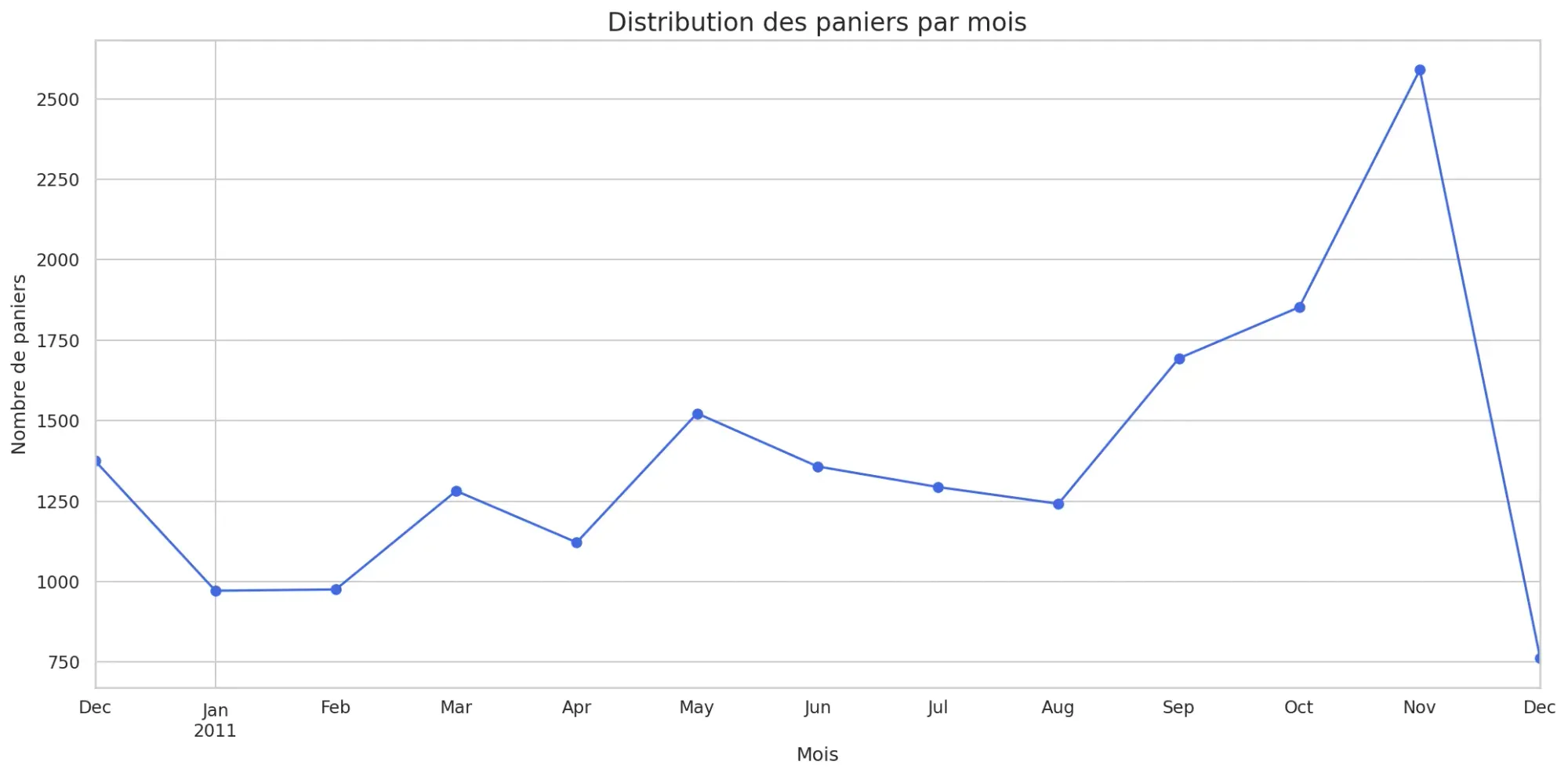
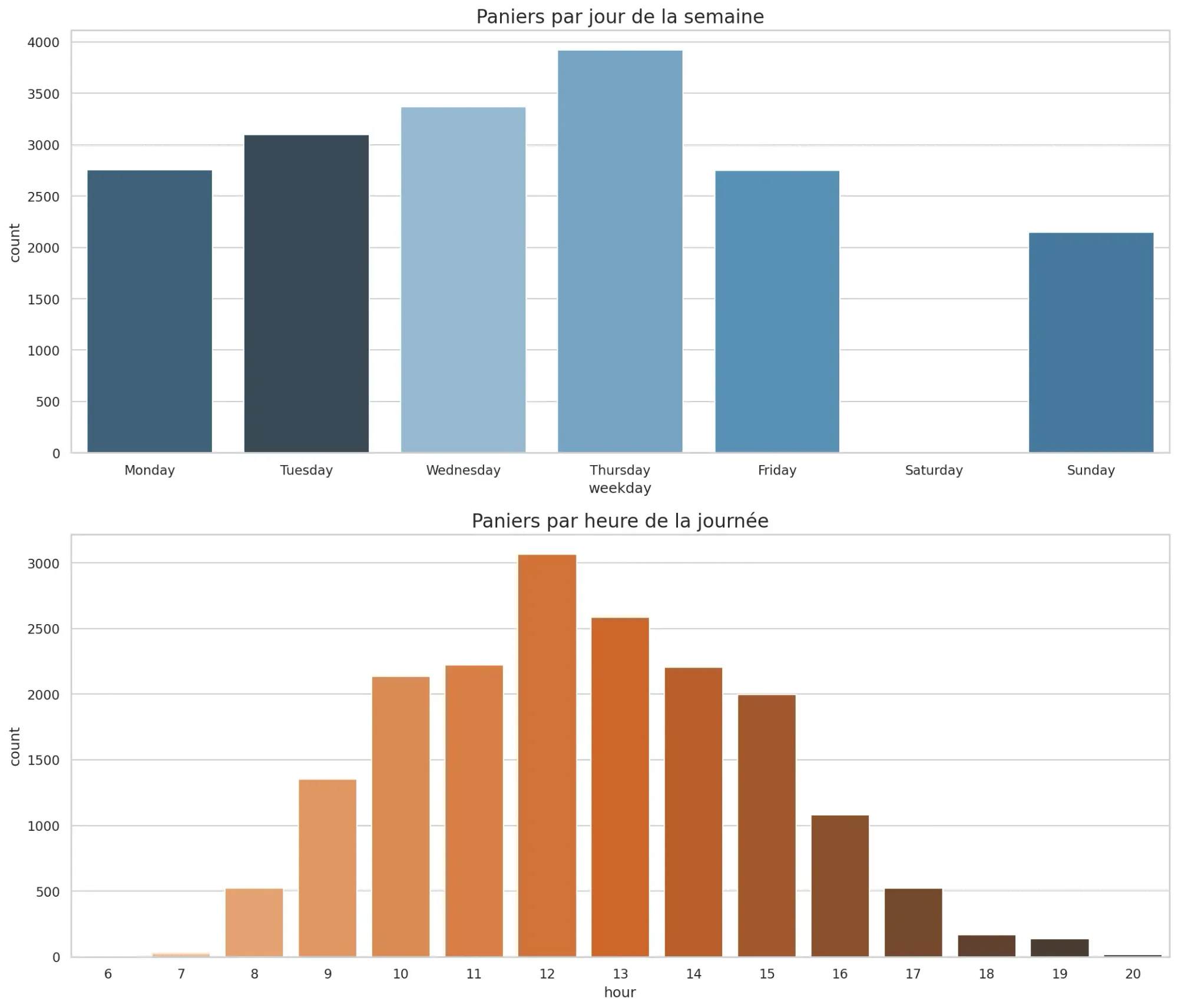
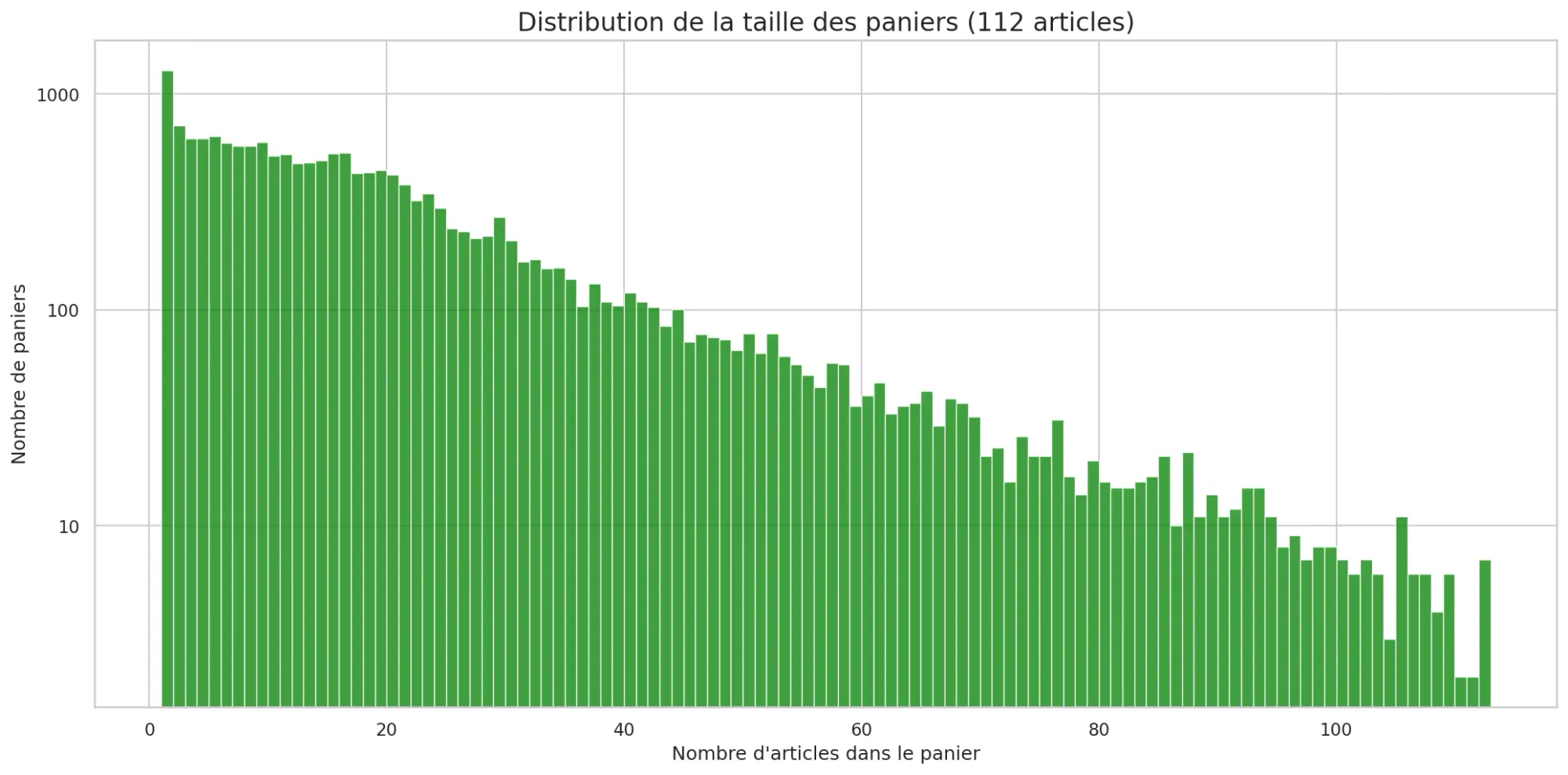
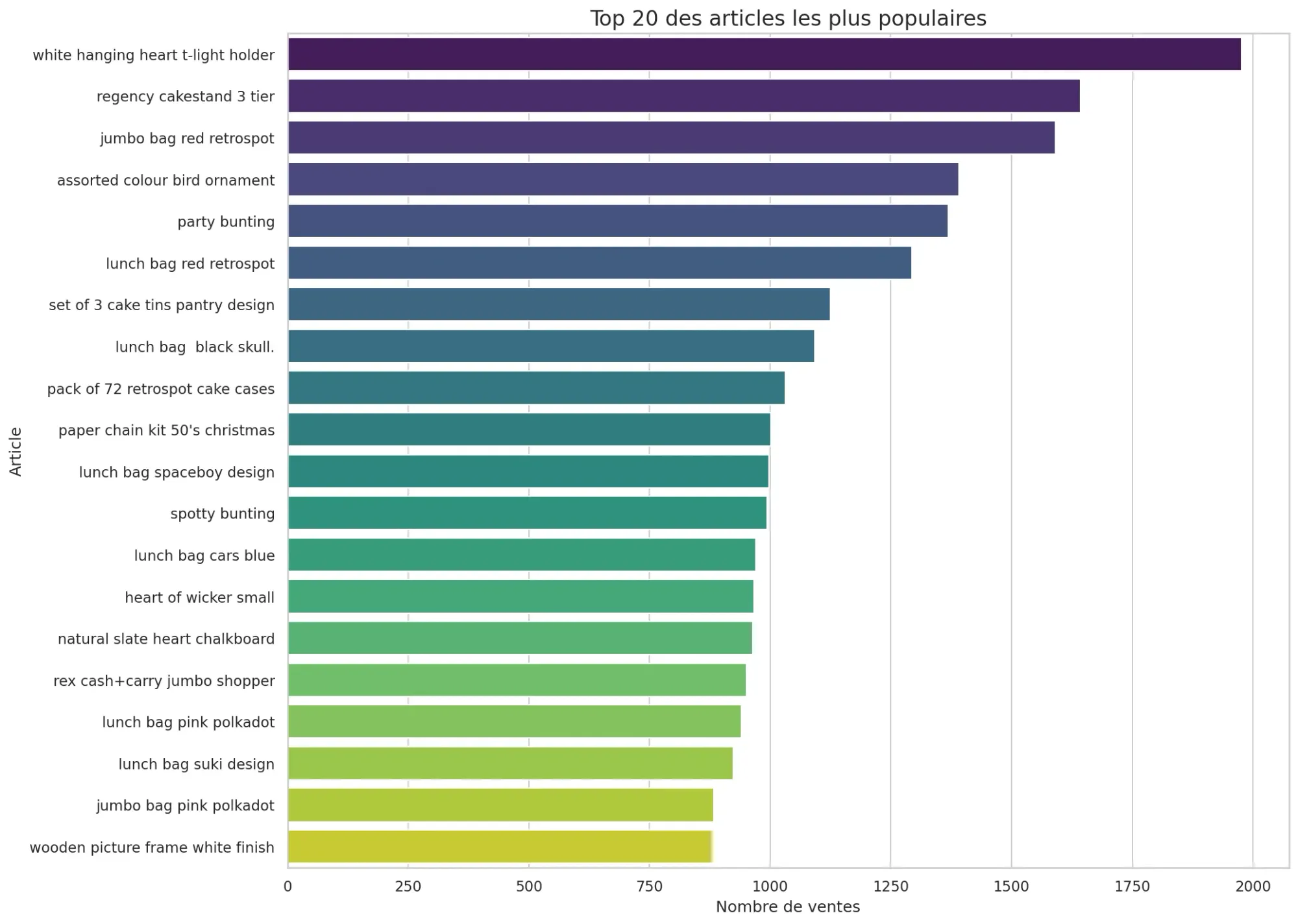
- Descriptive analysis: basket distribution by month, day and hour, basket size and best-selling items.
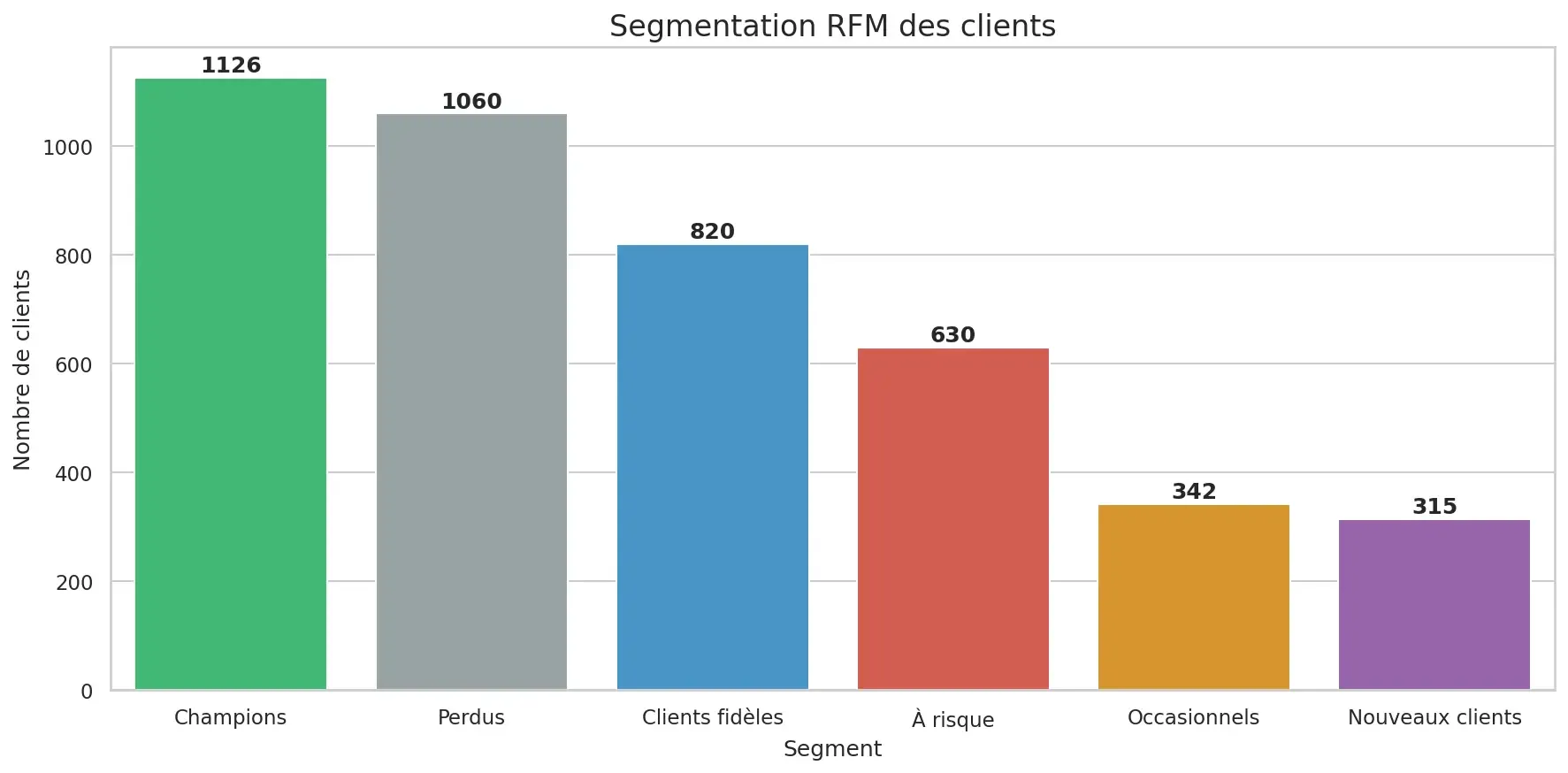
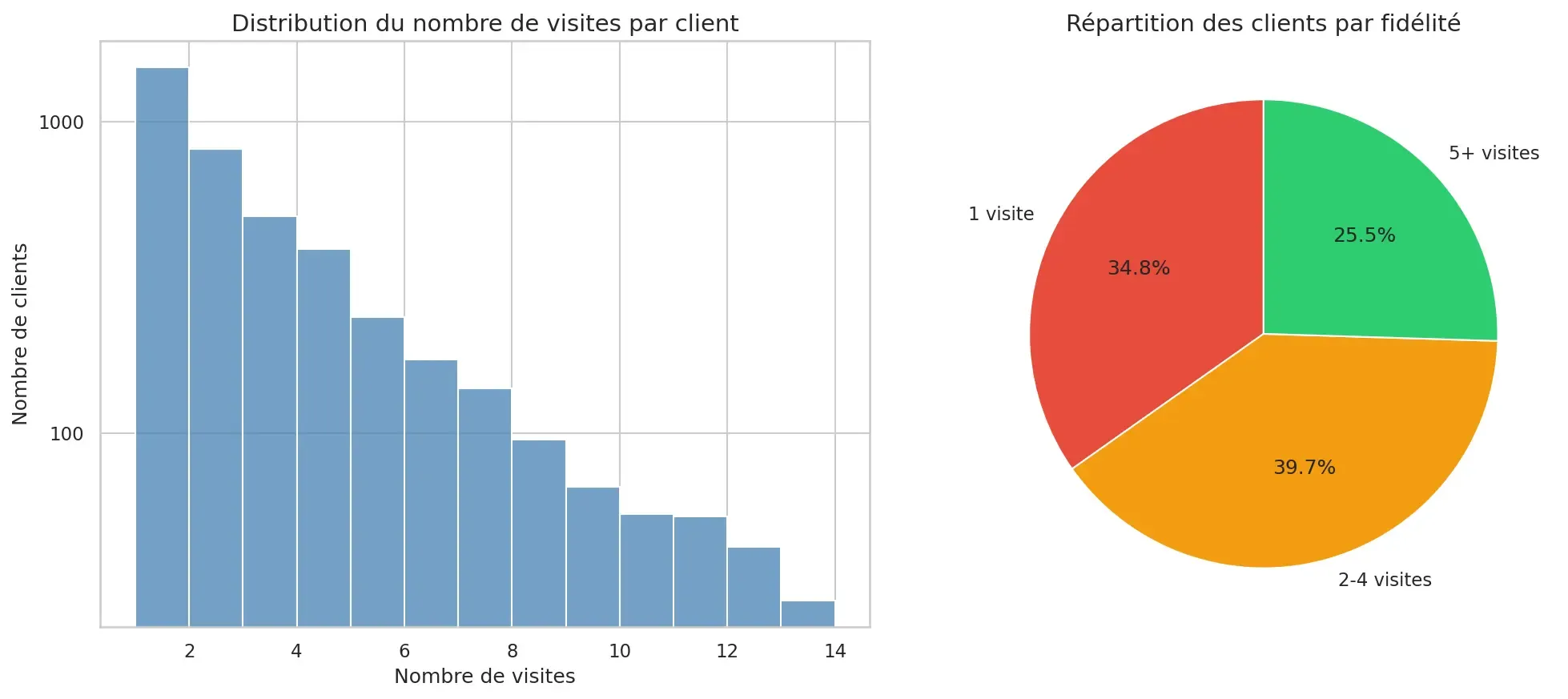
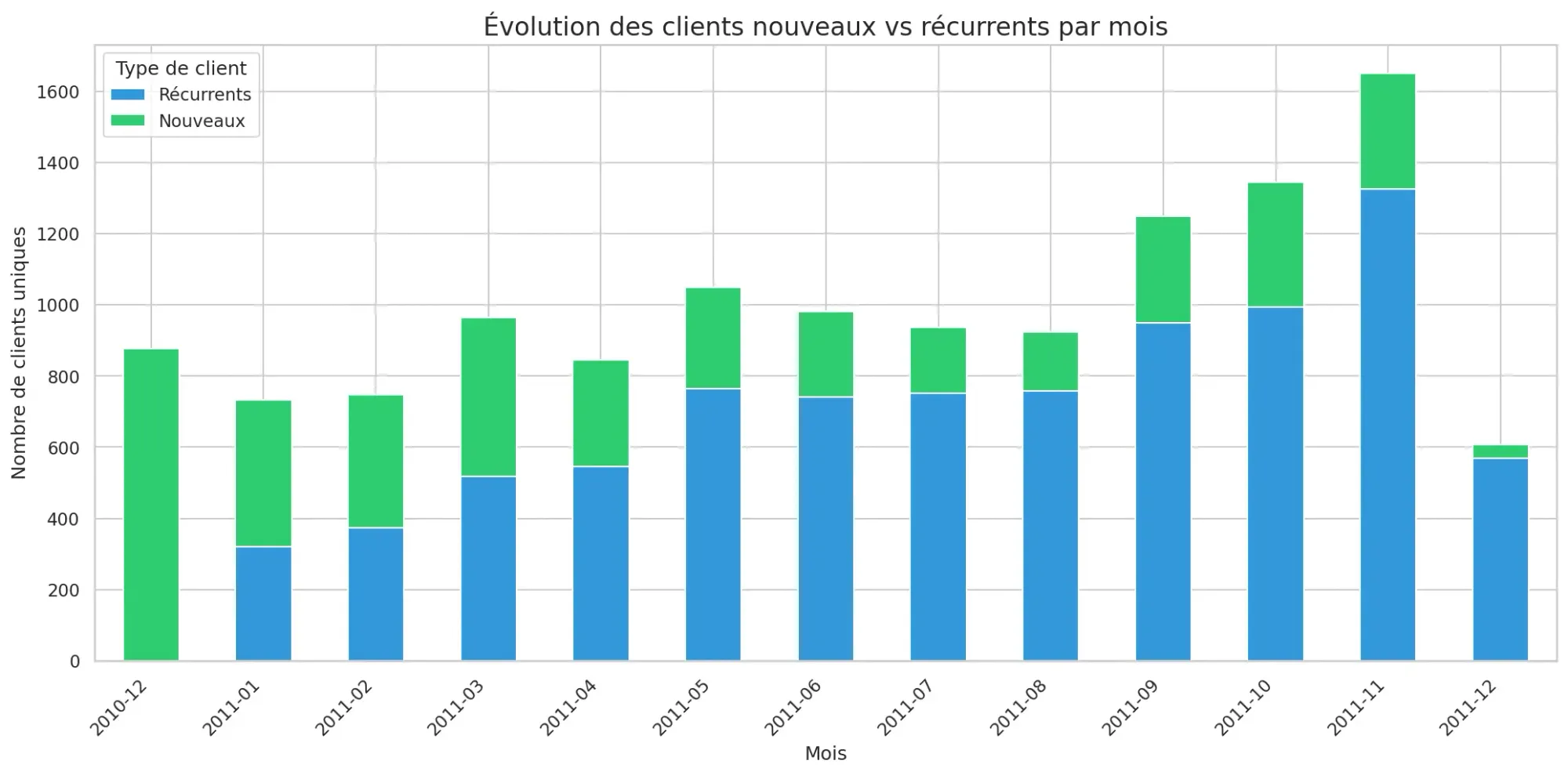
- Customers: RFM segmentation into 6 segments, loyalty analysis and tracking of new and returning customers.
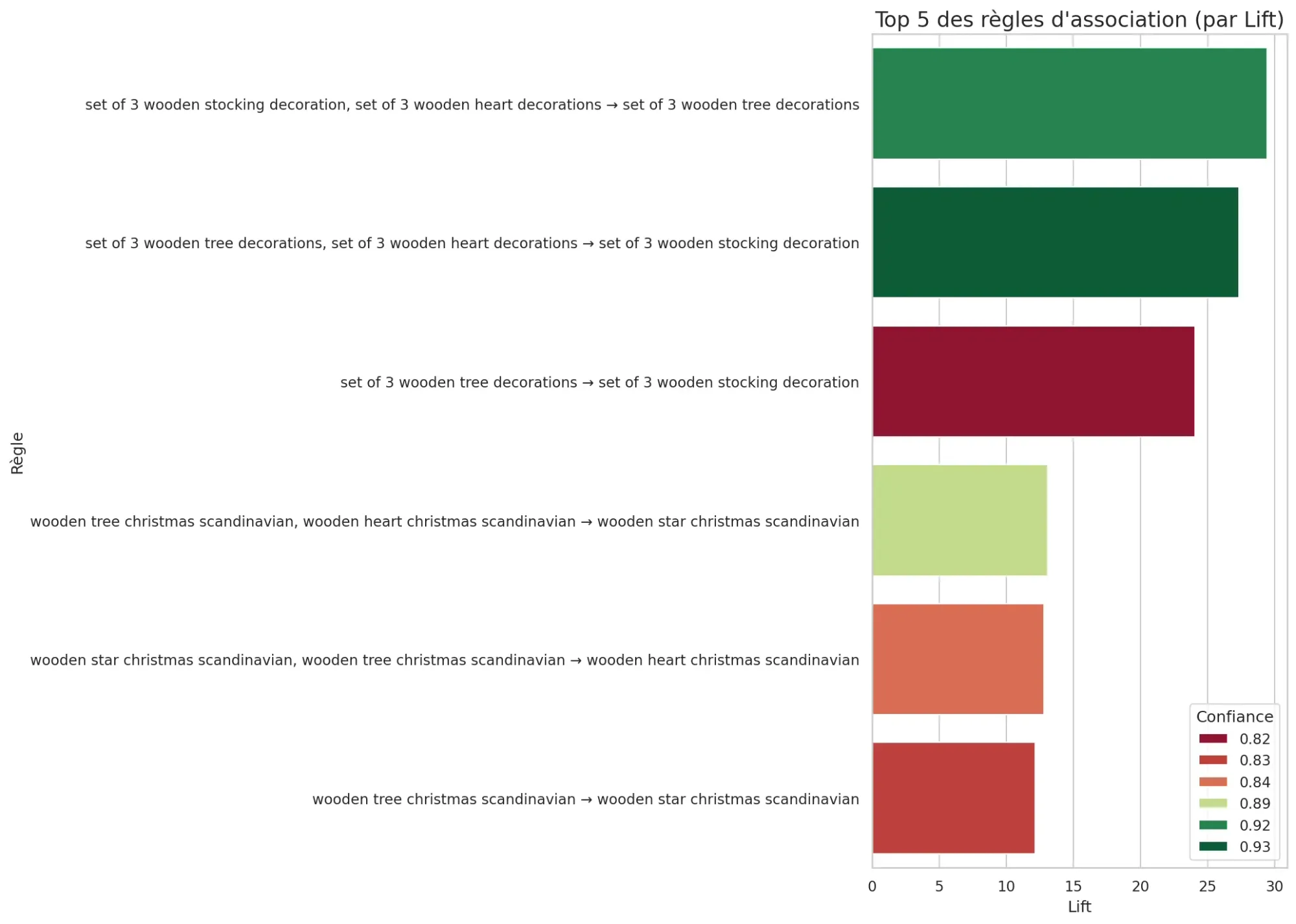
- Association rules: Apriori over the last 30 days, with a minimum support of 2%, itemsets of size 3 at most and a minimum confidence of 80%, then sorted by lift.
Visuals
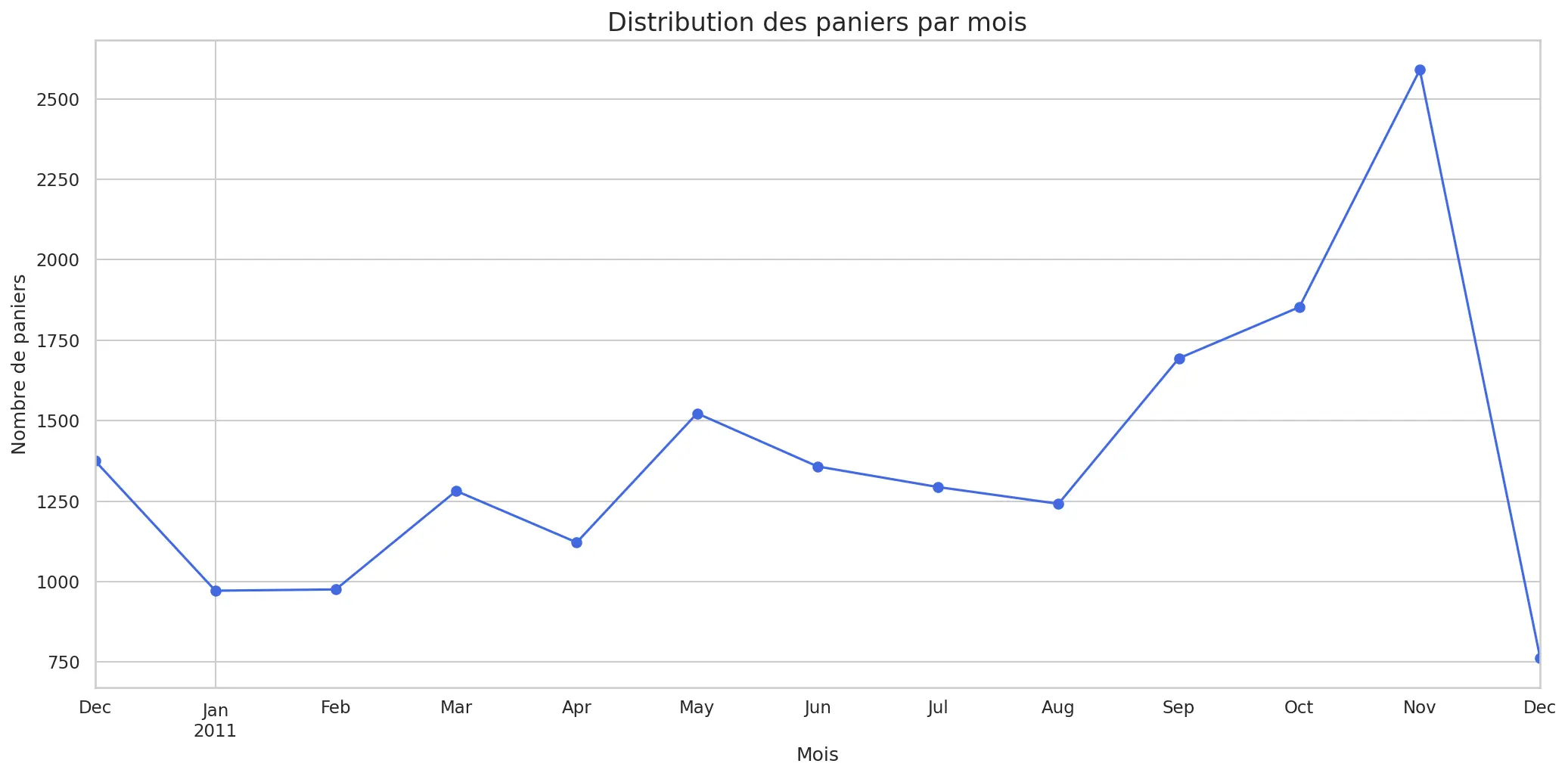
Baskets per month, with a peak in November. 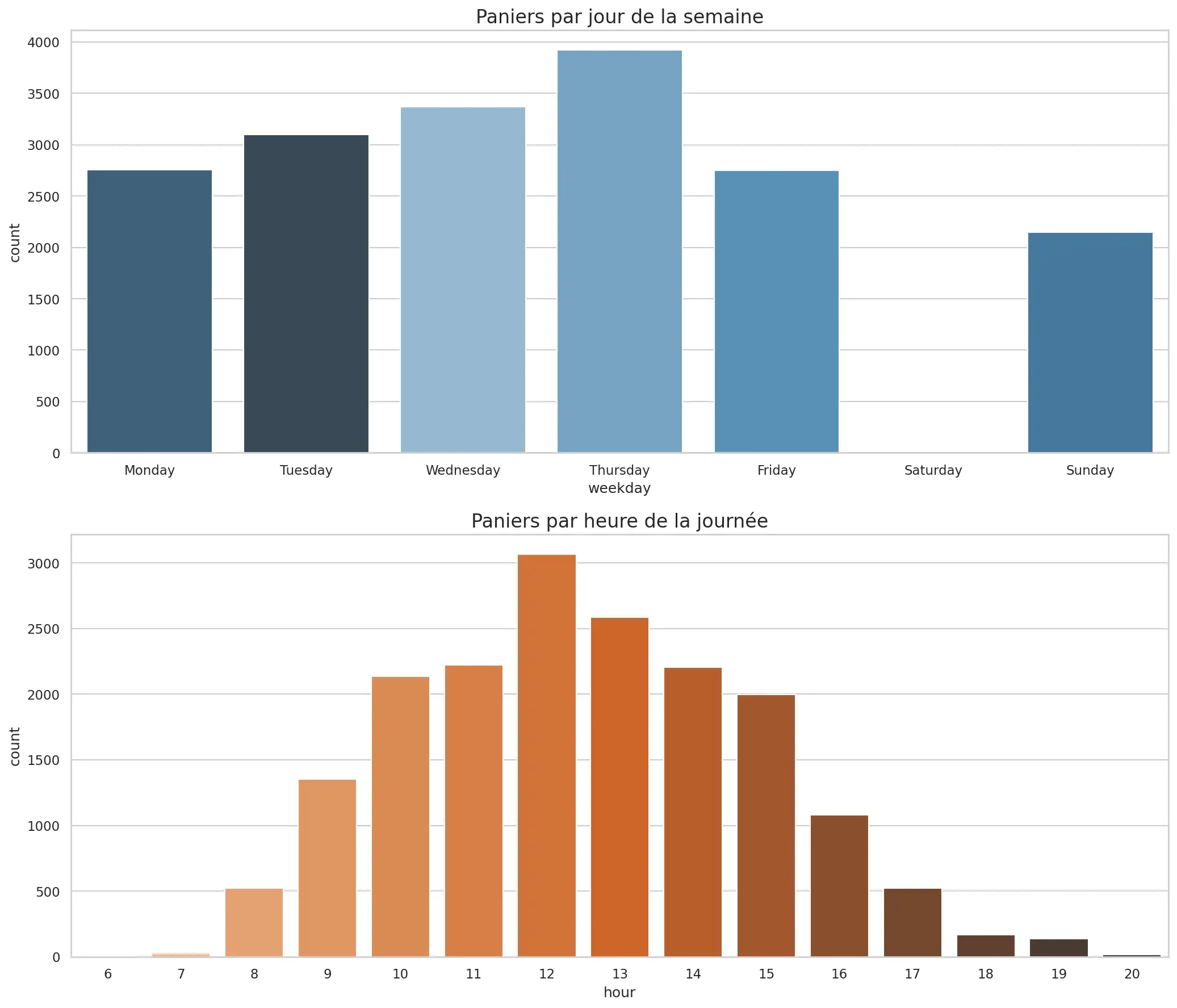
Baskets by day of the week and by hour. 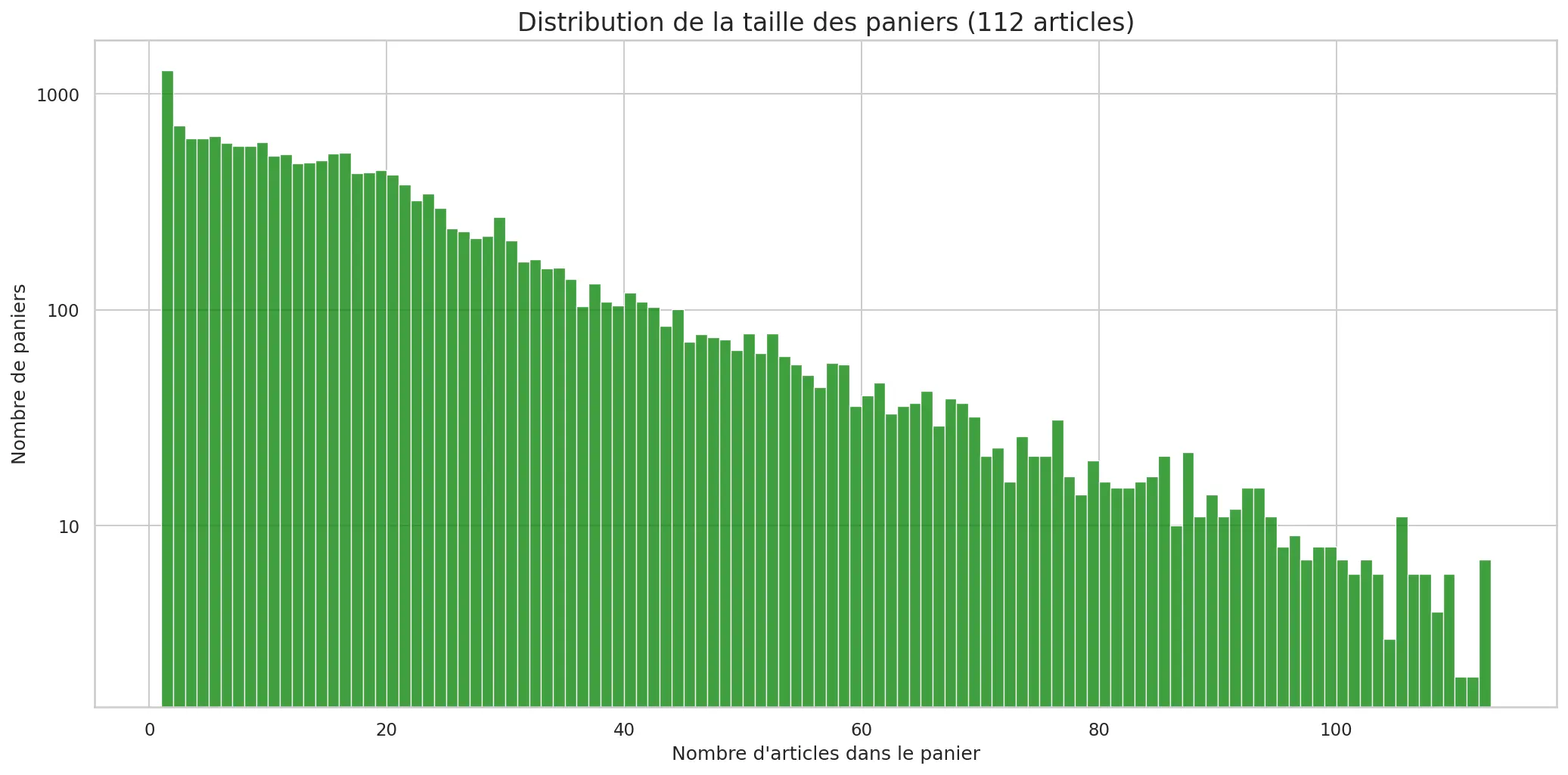
Basket size distribution. 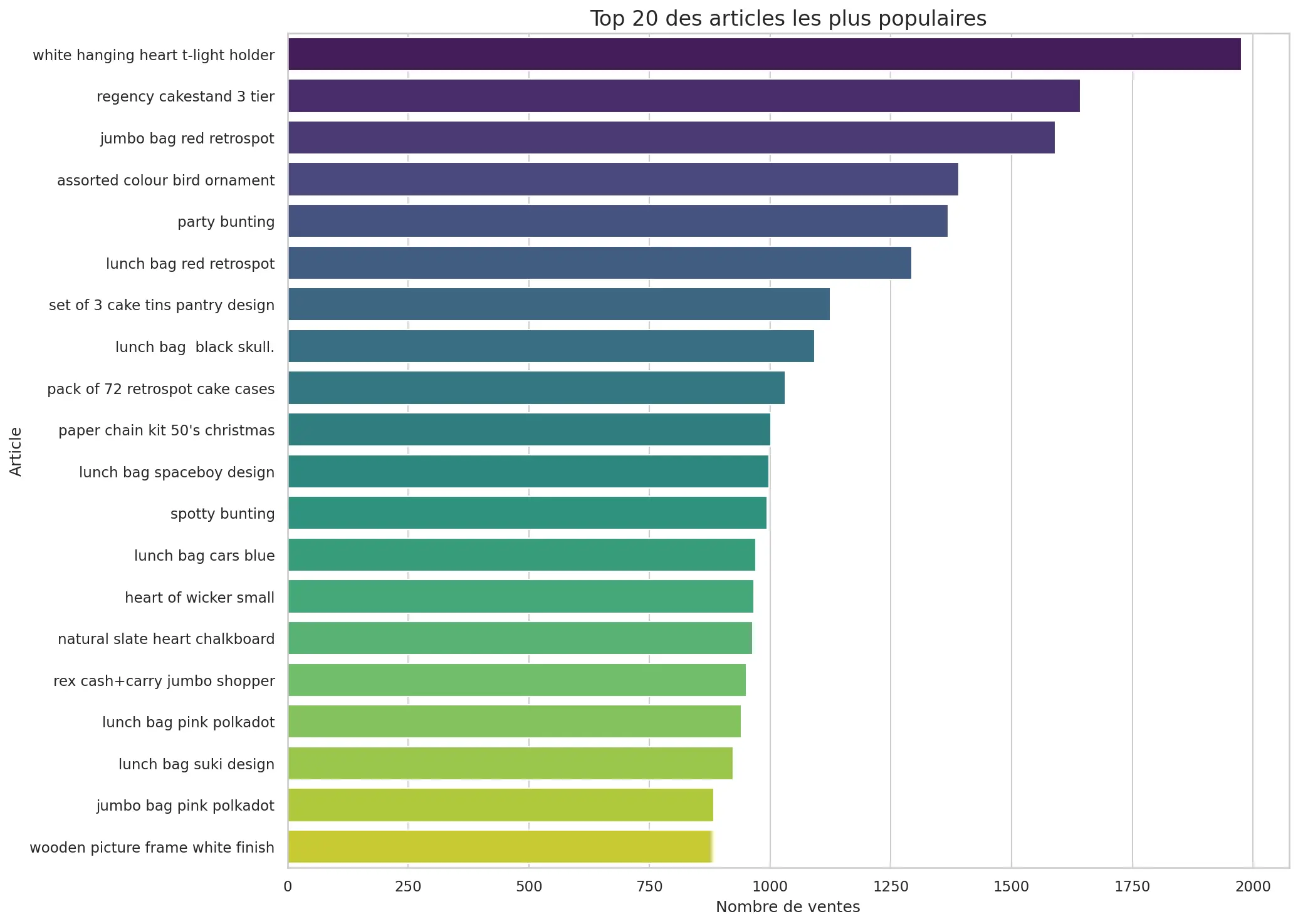
The 20 most popular items. 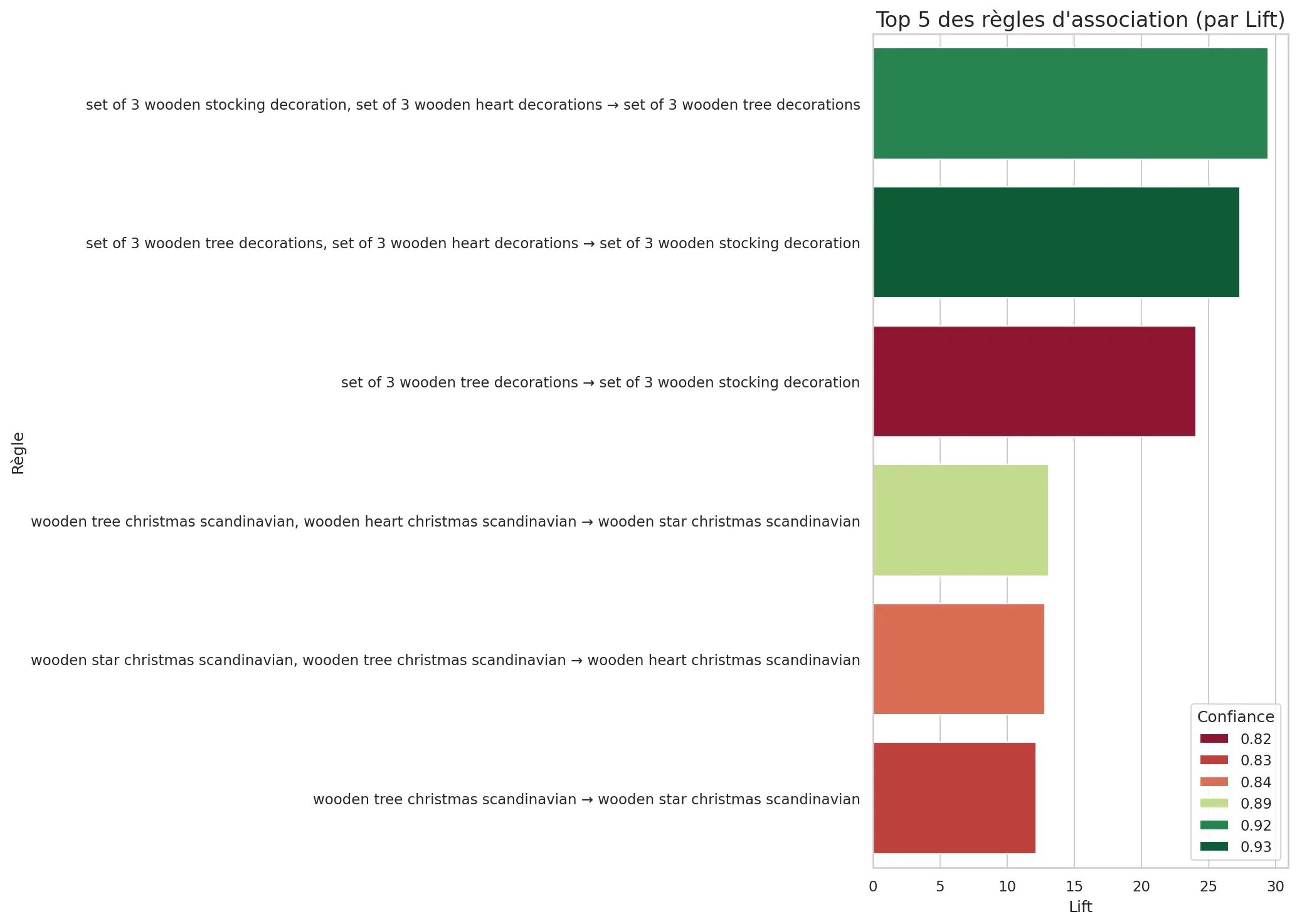
The 6 association rules, sorted by lift. 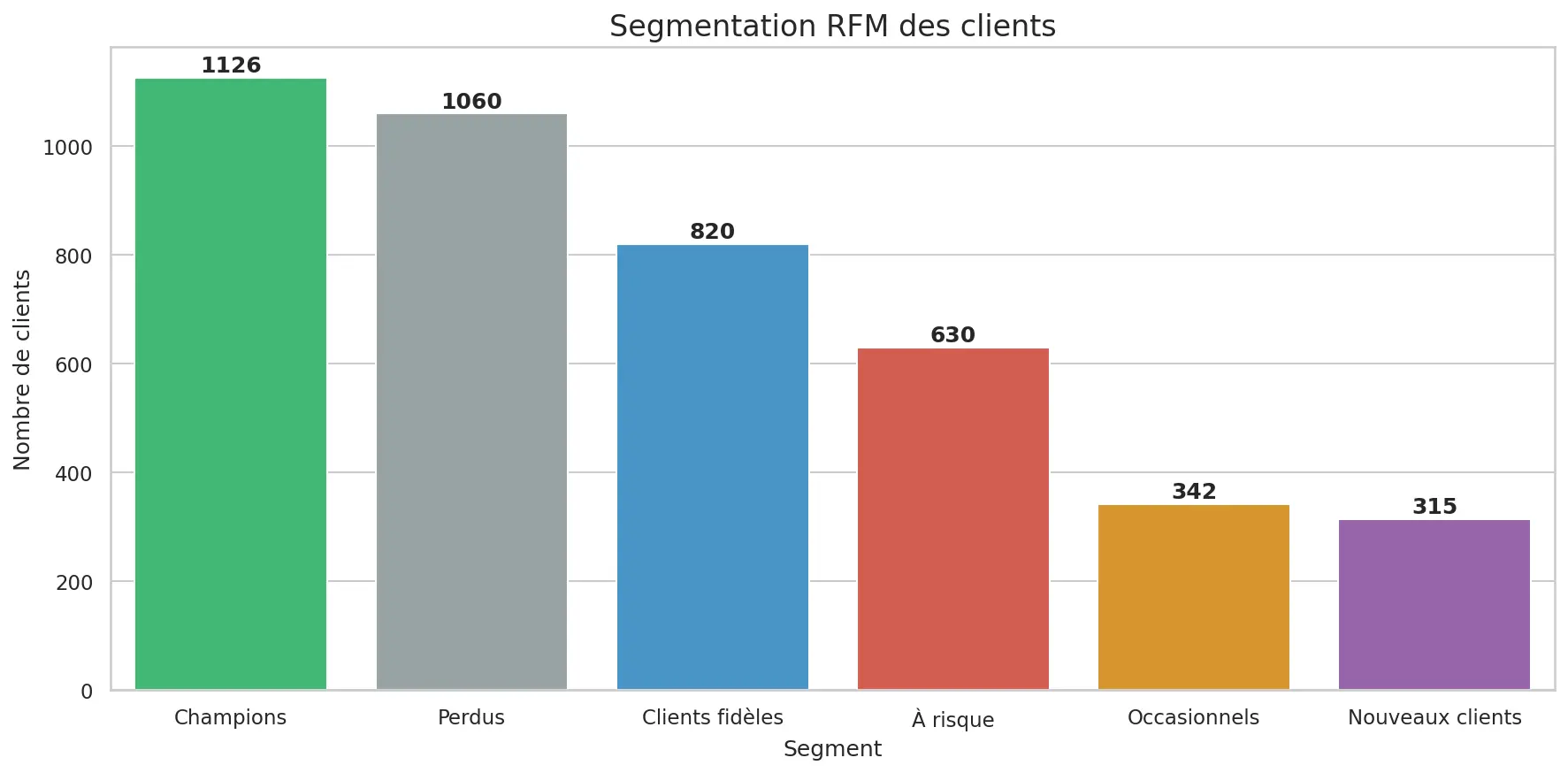
RFM segmentation of the 4,293 customers. 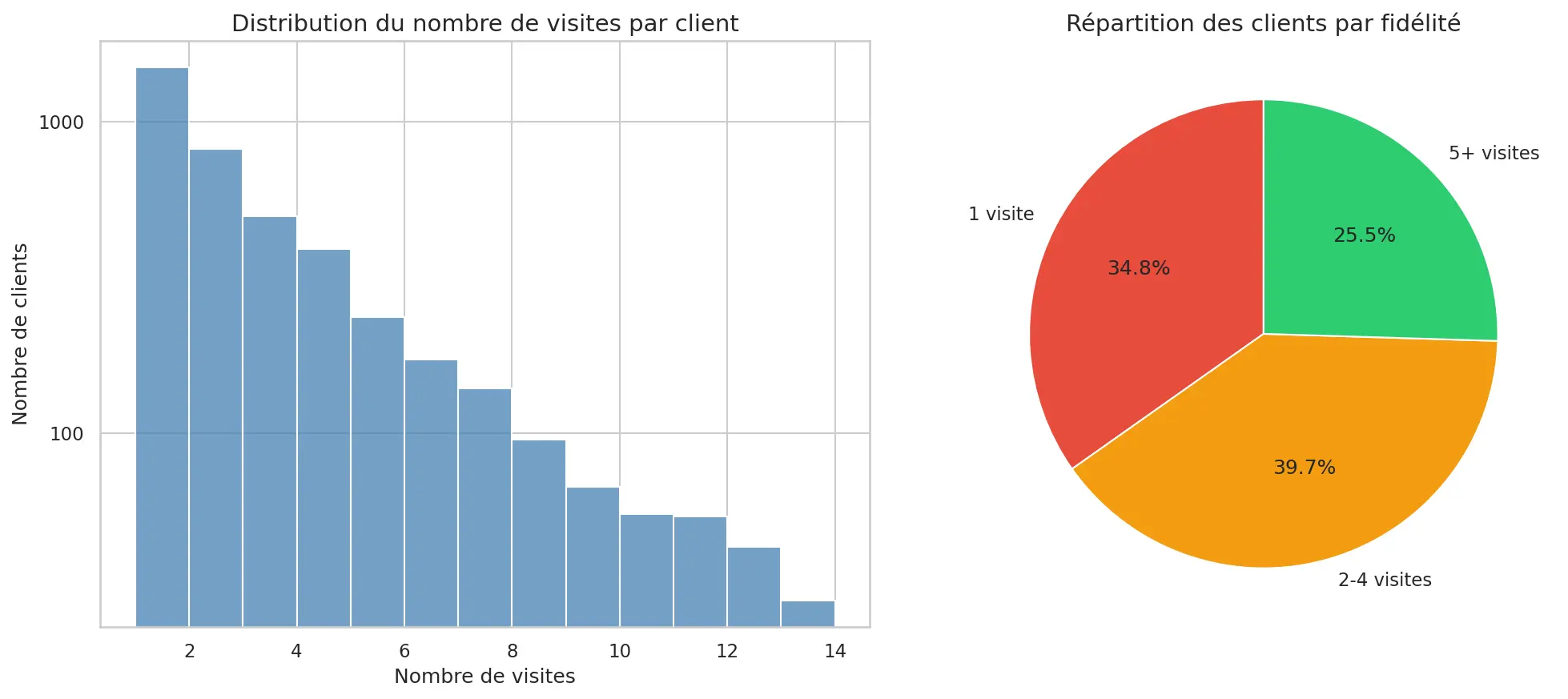
Customer loyalty. 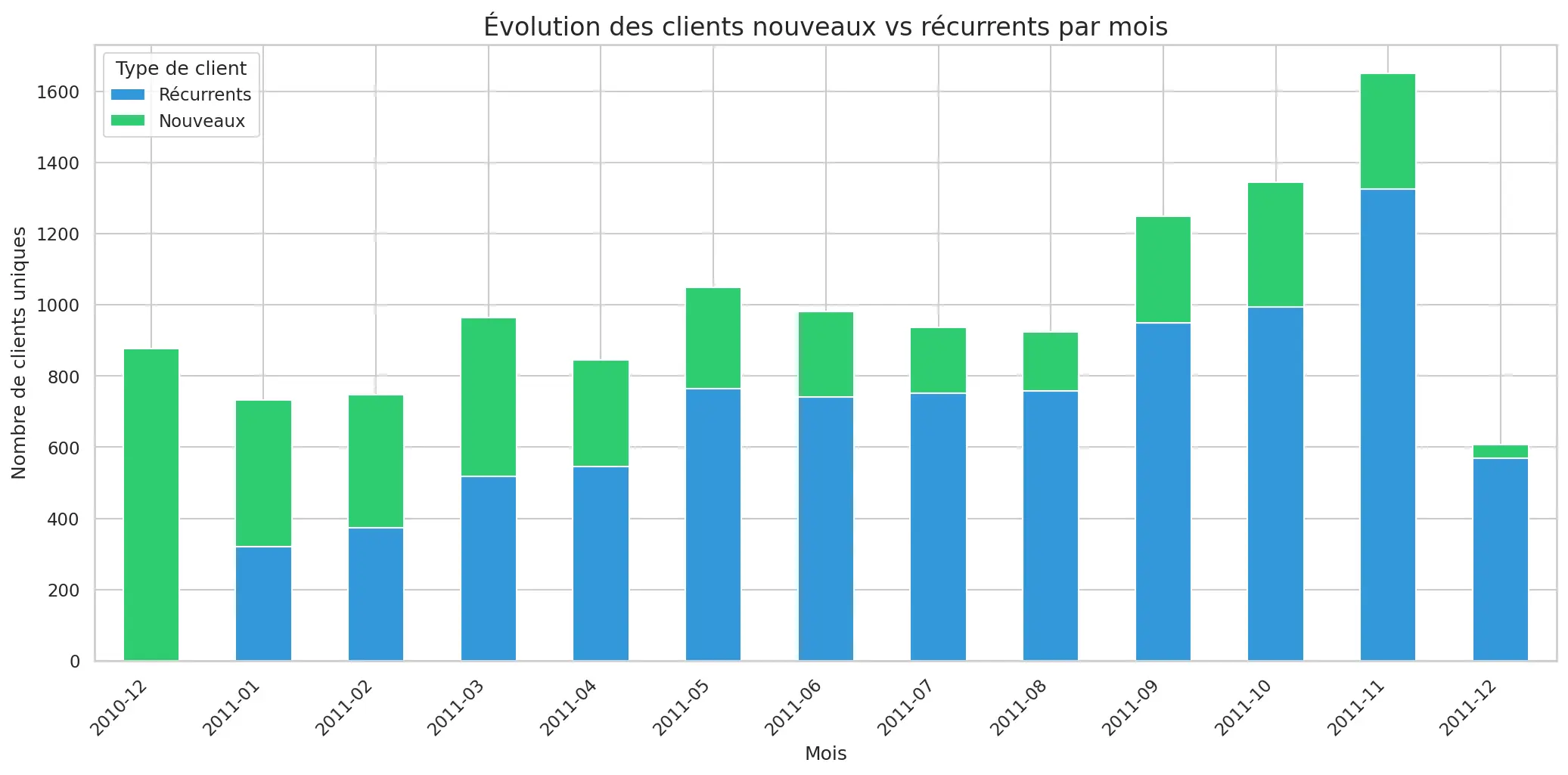
New and returning customers per month.
Facts and figures
- valid after cleaning, from December 2010 to December 2011
- 18,044 baskets
- and 3,835 distinct items
- 4,293 customers
- of customers from the RFM analysis
- 6 segments
- analyzed by Apriori, over the last 30 days
- 2,670 baskets
- kept at 2% support and 80% confidence
- 6 rules
- for the best rule, with 91.5% confidence
- Lift of 29.44
What I took away
The main challenges and lessons came from managing the project and from setting up the initial requirements.